Blog · · 2 min read
Stimulate Your Brain with Sudoku
Why I rate sudoku as training for a working brain, and how to start without hating it.
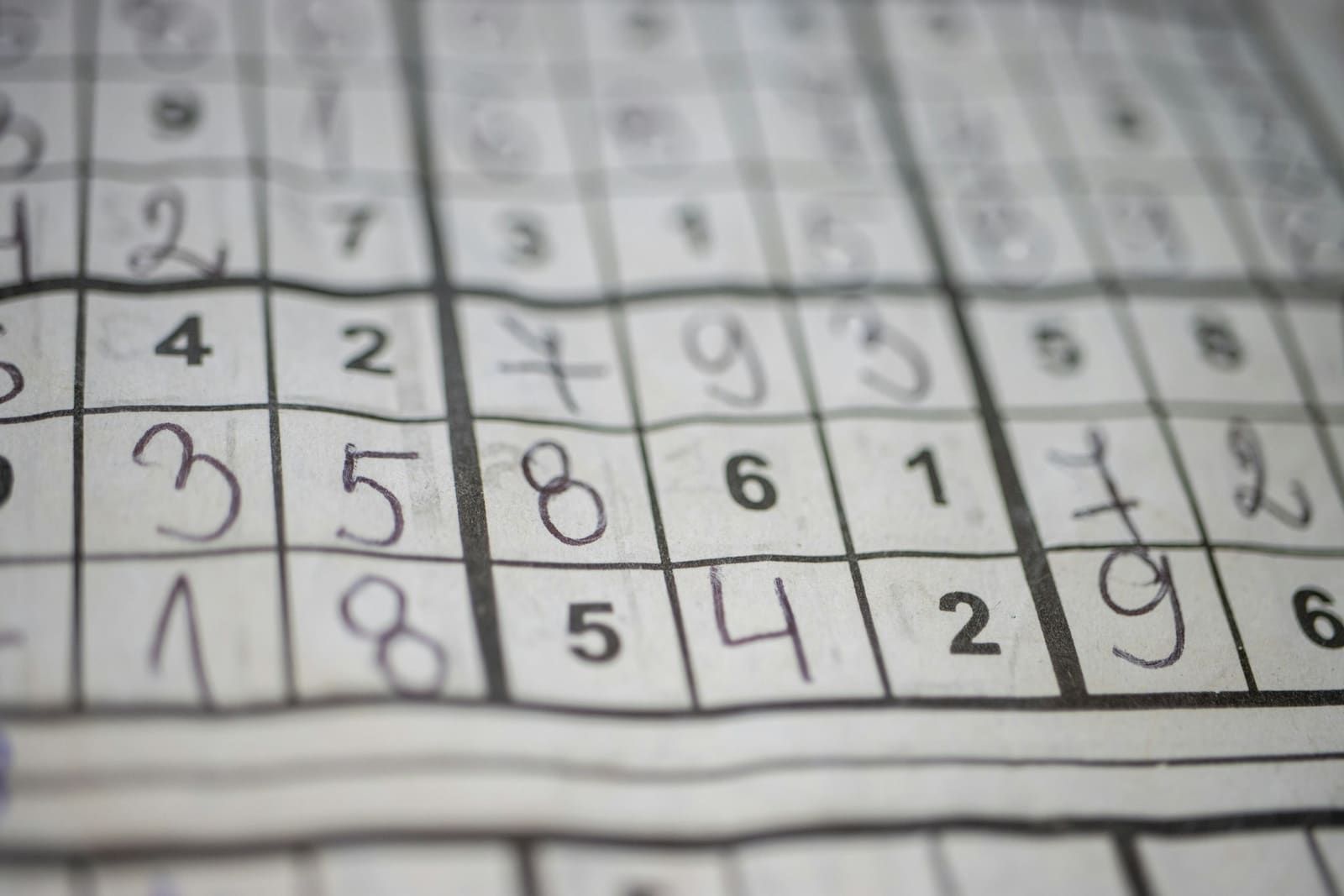
Sudoku gets treated as a way to kill time on a flight. Played regularly, it is closer to a gym for the parts of thinking a developer uses all day. The rules take a minute to learn. A nine by nine grid holds nine three by three boxes, and every row, column and box must end up holding the digits one to nine exactly once. Everything after that minute is logic.
What It Trains
Memory, first. Holding candidate digits in your head while you test them against a row is short-term memory doing real work, and the techniques you accumulate settle into long-term memory the way design patterns do.
Concentration, second. A hard puzzle does not forgive a wandering mind. You learn to hold attention on one problem for twenty unbroken minutes, and that capacity follows you back to work. The reasoning itself transfers too. A grid is solved by forming a hypothesis, testing it, and backing out cleanly when it fails, which is debugging by another name.
It also works as rest. Twenty minutes inside a grid is twenty minutes nothing else can get into, and I find it settles a noisy day better than most things sold as relaxation. There is decent evidence that keeping the brain working like this helps it age well too, and that the habit may hold off some of the decline that comes with the years.
The underrated part is flexibility. Grids regularly stop yielding to your favourite technique, and progress means dropping the approach you are attached to and attacking from a different angle. That is useful practice for considerably more than puzzles.
If You Are Starting
Learn on easy grids and move up slowly, because frustration teaches nothing. Pick up the basic techniques early. Scanning a row for its missing digits, cross-hatching a box, pencilling small candidate numbers into the corners of cells. Each one unlocks a harder class of puzzle.
Then simply play. A grid a day does more than a binge once a month, and there is no shortage of material. Books, apps and endless free puzzles online cover everyone from first grid to expert.
I keep a plain timer running for my own puzzles. Not to race anyone, but because watching the solve times drift down is the clearest sign the training is working.